Safety Assessment of Hydroxyanthracene Derivatives
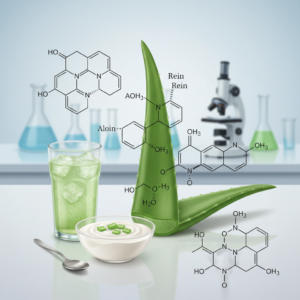
Hydroxyanthracene derivatives are found in various plants such as Senna, Aloes, Frangula, Cascara and Rhubarb. Preparations made from these plants are used medicinally due to their laxative effect, and corresponding products are also available in the European food/food supplement market. The safety of these foods is currently being questioned by the European authorities.
Background
In March 2023, the European Commission issued a mandate to the European Food Safety Authority (EFSA) to assess the safety of hydroxyanthracene derivatives in various plants and their preparations. In early summer 2024, EFSA then published its scientific opinion on additional scientific data on the safety of preparations of Rheum palmatum L., Rheum officinale Baill. and their hybrids, Rhamnus purshiana DC, Rhamnus frangula L. and Cassia senna L. These had been placed under the control of the Union in accordance with Article 8(4) of Regulation (EC) No 1925/2006 in Annex III, Part C. The Panel on Nutrition, Novel Foods and Food Allergens (NDA) reviewed the additional scientific data submitted during the review period and in the public consultation of healthcare professionals. The relevant scientific data consisted of in vitro and in vivo genotoxicity studies on the plant preparations to be tested. In accordance with the statement of EFSA’s Scientific Committee on the genotoxicity assessment of chemical mixtures, the herbal preparations used in those studies should be regarded as genotoxic and of concern in view of the presence of an in vivo genotoxic compound.
In particular, it is stated that the extracts of Rhubarb (Rheum palmatum L., Rheum officinale Baill. and their hybrids), Frangula (Rhamnus frangula L.), Cascara (Rhamnus purshiana DC.) and Senna (Cassia senna L.) have been tested for genotoxicity in several in vitro and in vivo studies. All studies showed negative results. However, EFSA’s Working Group on Genotoxicity found that the extracts tested are complex mixtures and that aloe-emodin, which is known to be genotoxic in vivo (EFSA ANS Panel, 2018), is naturally present in these plant extracts. The above-mentioned opinion of EFSA’s Scientific Committee states the principle that if the mixture contains substances that are assessed as genotoxic in vivo, the entire mixture is a cause for concern in terms of genotoxicity. In view of the fact that aloe-emodin has been shown to be genotoxic in vivo, the mixture must be classified as a concern in terms of genotoxicity if the absence of that constituent in a plant extract cannot be demonstrated by appropriate analytical methods. Overall, the working group concluded that the genotoxicity of the plant preparations in question is a cause for concern. Further details can be found in the Report.
Affected product groups
It is true that EFSA’s statements apply primarily to the food sector, and for the medicinal use of the plants mentioned, the assessments of efficacy and safety as well as the recommendations for use result from the monographs or the underlying assessment reports of the Herbal Medicinal Products Committee (HMPC). However, a transfer of the discussion from the food to the pharmaceutical sector cannot be completely ruled out, especially in view of the ongoing revision of the guidelines for the assessment of the genotoxicity of herbal preparations in the HMPC.
Activities of Kooperation Phytopharmaka
Kooperation Phytopharmaka offers coordinated activities to affected manufacturers in advance of possible future developments. For example, an expert opinion is currently being planned to specifically investigate the questions of whether, on the one hand, the intake of laxatives containing anthraquinones leads to a change in the intestinal mucosa that goes beyond discolouration, and on the other hand, whether such changes are to be regarded as carcinoma precursors. Further information, including the possibility of participating in corresponding projects, can be found HERE.